


Introduction
Hemiplegia, a condition characterised by complete or partial paralysis on one side of the body, presents significant challenges for those who wish to maintain their independence through driving. Whether resulting from stroke, traumatic brain injury, cerebral palsy, or other neurological conditions, hemiplegia affects millions of people across the United Kingdom and worldwide. The prospect of returning to the driver’s seat after developing hemiplegia can seem daunting, yet with proper assessment, vehicle adaptations, and rehabilitation, many individuals successfully regain this vital aspect of independence.
This comprehensive article explores real-world case studies of individuals with hemiplegia who have navigated the journey back to driving. We’ll examine the challenges faced, solutions implemented, and outcomes achieved, providing valuable insights for healthcare professionals, occupational therapists, driving instructors, and those living with hemiplegia themselves. Understanding these experiences can illuminate the path forward for others facing similar circumstances whilst highlighting the importance of individualised assessment and adaptation.
Understanding Hemiplegia and Its Impact on Driving Ability
What Is Hemiplegia?
Hemiplegia refers to severe weakness or complete paralysis affecting one side of the body, typically involving the arm, leg, and sometimes the face on the affected side. The condition results from damage to the brain’s motor control centres, most commonly following a stroke, though it can also arise from brain tumours, multiple sclerosis, infections, or congenital conditions such as cerebral palsy.
The severity of hemiplegia varies considerably between individuals. Some experience complete loss of movement (plegia), whilst others retain partial function (hemiparesis). Associated symptoms often include:
- Muscle weakness or complete paralysis on one side
- Reduced coordination and fine motor control
- Spasticity or muscle stiffness
- Balance and postural difficulties
- Cognitive changes affecting reaction times
- Visual field deficits
- Fatigue and reduced stamina
Driving Challenges Specific to Hemiplegia
Operating a motor vehicle requires coordinated use of both hands and feet, rapid decision-making, adequate visual fields, and sustained concentration. Hemiplegia can compromise several of these essential functions:
Physical challenges include difficulty steering with one hand, operating pedals with affected legs, managing secondary controls such as indicators and windscreen wipers, and maintaining proper posture for extended periods.
Cognitive and perceptual challenges may encompass slower reaction times, spatial awareness difficulties, visual neglect (particularly left-sided), and reduced ability to process multiple simultaneous stimuli.
Psychological factors such as anxiety about returning to driving, fear of causing accidents, and loss of confidence can prove equally significant as physical limitations.
Legal Framework and Assessment Requirements in the UK
DVLA Regulations for Drivers with Hemiplegia
In the United Kingdom, the Driver and Vehicle Licensing Agency (DVLA) maintains strict guidelines regarding medical fitness to drive. Individuals who develop hemiplegia must notify the DVLA of their condition, as failure to do so may invalidate insurance and result in prosecution.
For car and motorcycle licences, drivers must typically:
- Refrain from driving for at least one month following a stroke
- Demonstrate adequate recovery of limb function
- Show satisfactory control of the vehicle with appropriate adaptations
- Meet visual field requirements (at least 120 degrees horizontal)
- Pass a specialist driving assessment if recommended
The DVLA may issue time-limited licences requiring periodic medical review, particularly in the initial years following diagnosis.
The Role of Occupational Therapy and Driving Assessment Centres
Specialist driving assessment centres employ occupational therapists and approved driving instructors who work collaboratively to evaluate fitness to drive. These comprehensive assessments typically include:
1. Clinical assessment: Evaluating physical function, range of movement, strength, coordination, cognition, and perception
2. Off-road assessment: Testing reaction times, hazard perception, and cognitive abilities using simulators
3. On-road assessment: Practical driving evaluation in adapted vehicles with dual controls
4. Adaptation recommendations: Identifying appropriate vehicle modifications to compensate for functional limitations
Case Study 1: Right-Sided Hemiplegia Following Stroke
Background
Margaret, a 58-year-old primary school teacher from Manchester, suffered an ischaemic stroke affecting the left hemisphere of her brain, resulting in right-sided hemiplegia. Prior to her stroke, Margaret was an experienced driver who relied on her car for commuting to work and maintaining social connections in her rural community.
Initial Assessment
Six months post-stroke, Margaret’s neurologist cleared her for a driving assessment. Her occupational therapist noted:
- Good cognitive recovery with no significant perceptual deficits
- Moderate weakness in the right arm with limited fine motor control
- Mild weakness in the right leg but adequate strength for pedal operation
- Full visual fields
- Good insight and motivation to return to driving
Adaptations Implemented
Following assessment at a specialist driving centre, several modifications were recommended along with standard vehicle features to make sure the car had:
Primary control adaptations:
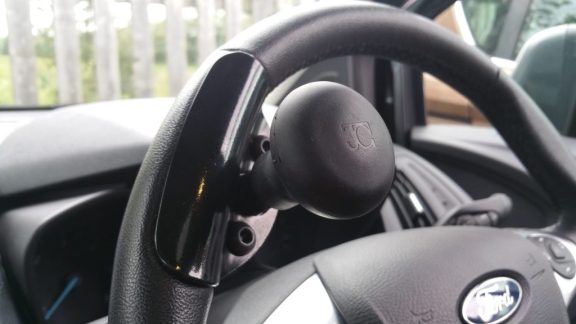
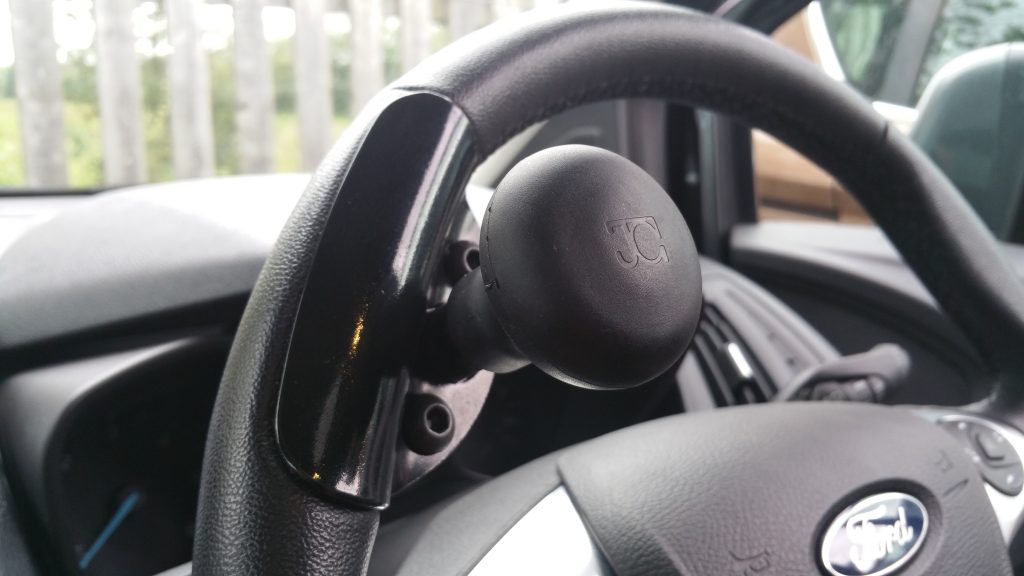
- Steering ball attached to the steering wheel, allowing one-handed steering with the left hand
- Left-foot accelerator pedal to compensate for right leg weakness
Secondary control adaptations:
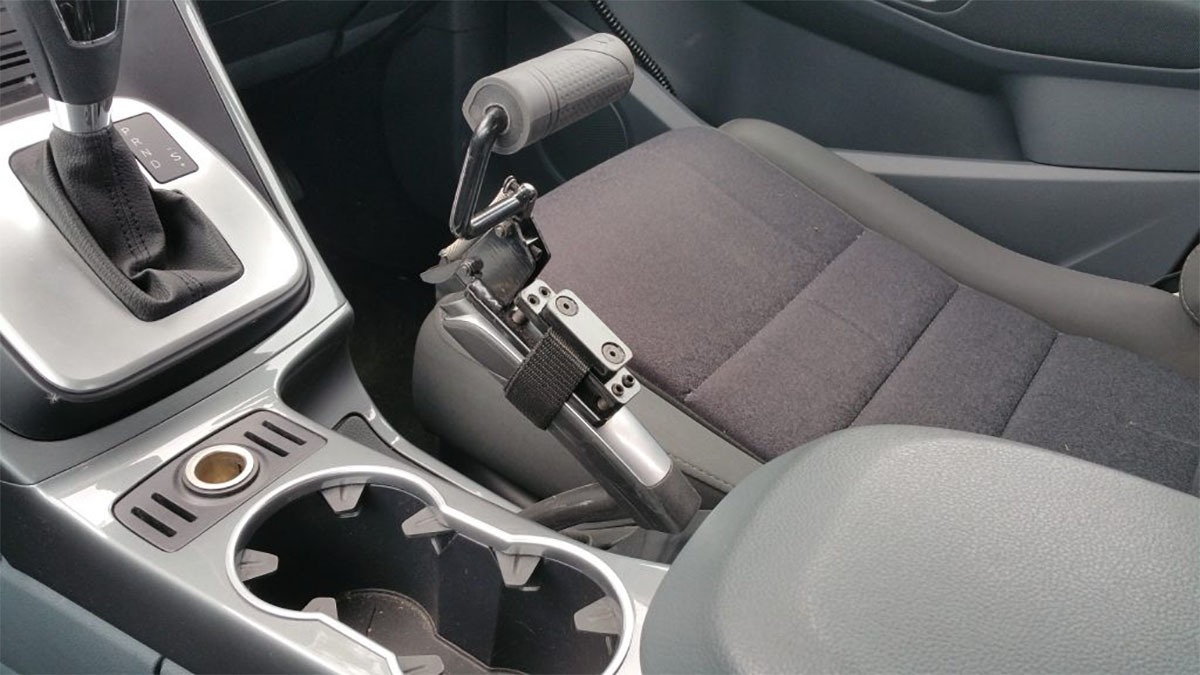
- Remote Control Device linked to the steering ball for operating secondary functions, like indicators, headlights and wipers, that would usually be controlled from the indicator stalks
Standard vehicle features:
- Automatic transmission (Margaret’s previous vehicle was manual)
- Electric windows
Outcomes
After twelve hours of adapted driving tuition, Margaret successfully passed her practical driving test in an adapted vehicle. She reported:
- Significant improvement in confidence and independence
- Successful return to work with modified hours
- Reduced reliance on family members for transport
- Some initial fatigue requiring shorter journeys, which improved over six months
Margaret’s case demonstrates that right-sided hemiplegia, whilst challenging, can be successfully managed with appropriate vehicle adaptations, particularly when cognitive function remains intact.
Case Study 2: Left-Sided Hemiplegia with Perceptual Difficulties
Background
David, a 45-year-old warehouse manager from Birmingham, sustained a right hemisphere stroke resulting in left-sided hemiplegia. Unlike Margaret’s case, David also experienced left-sided neglect, a common perceptual disorder following right-brain damage where individuals fail to attend to stimuli on their left side.
Initial Assessment
David’s driving assessment nine months post-stroke revealed:
- Complete paralysis of the left arm
- Moderate weakness in the left leg
- Mild left-sided visual neglect
- Reduced spatial awareness
- Occasional impulsivity
- Good physical strength on the right side
Challenges and Adaptations
David’s perceptual difficulties initially made him unsuitable for return to driving. His rehabilitation programme included:
Perceptual training:
- Occupational therapy focusing on left-sided awareness exercises
- Computer-based attention and scanning tasks
- Graduated driving simulator sessions to practice scanning patterns
Physical adaptations (implemented after perceptual improvement):
- Remote control device for all secondary functions consolidated on a single switch panel
Outcomes
David’s journey back to driving took eighteen months and required:
- Six months of intensive perceptual rehabilitation
- Successful completion of a cognitive driving assessment
- Twenty hours of adapted driving lessons
- A restricted licence initially limiting night driving
David eventually regained his full licence after demonstrating consistent performance over twelve months. His case illustrates that cognitive and perceptual impairments often present greater barriers than physical limitations and require dedicated rehabilitation before driving can be safely resumed.
Case Study 3: Congenital Hemiplegia in a Young Driver
Background
Sarah, a 19-year-old student from Edinburgh, was born with cerebral palsy causing left-sided hemiplegia. Having never driven before her condition, Sarah approached learning to drive differently from those who experienced acquired hemiplegia.
Initial Assessment
Sarah’s assessment revealed:
- Long-standing left arm paralysis with good compensatory strategies developed since childhood
- Mild left leg weakness with adequate pedal control
- No cognitive or perceptual deficits
- Excellent spatial awareness
- High motivation and realistic expectations
Adaptations Implemented
Sarah’s adaptations were relatively straightforward:
- Automatic transmission vehicle
- Steering ball for one-handed steering
- Standard right-foot pedal operation
- Minor modifications to secondary controls
Outcomes
Sarah passed her driving test after the typical number of lessons required by most learners. Her case demonstrates that individuals with congenital hemiplegia often develop superior compensatory strategies compared to those with acquired conditions, having adapted throughout their development.
Importantly, Sarah’s experience highlights that starting from a baseline of never having driven with full function can sometimes prove psychologically easier than relearning after loss of ability.
Vehicle Adaptation Options: A Comprehensive Overview
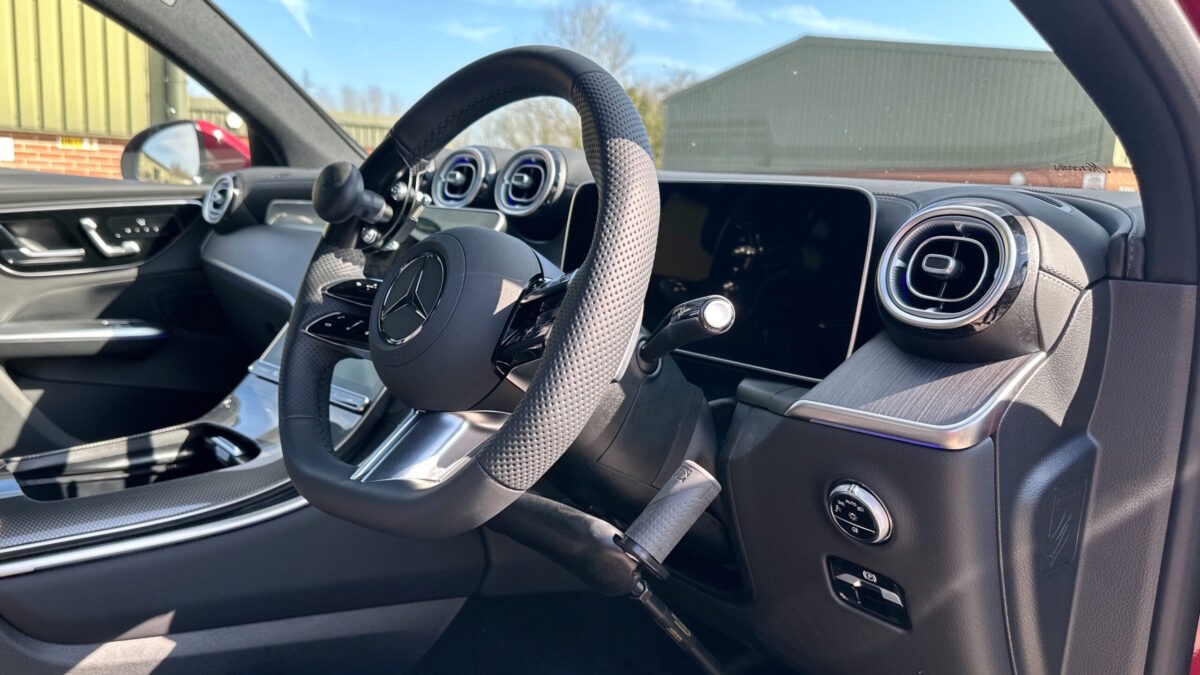
Steering Modifications
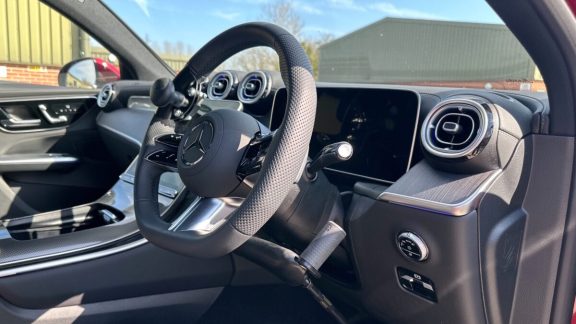
Steering balls or knobs attach to the steering wheel, enabling effective one-handed steering. Available in various designs, including:
- Simple ball attachments
- Tri-pin designs offering multiple grip positions and a more secure hold for people with low grip strength
- Ergonomic grips moulded to individual hand shapes
Reduced-effort steering systems decrease the physical force required to turn the wheel, beneficial for those with reduced upper body strength.
Left-foot accelerator pedals allow operation of acceleration with the stronger leg when right-sided weakness exists.
Pedal Modifications
Pedal guards prevent the affected foot from inadvertently contacting pedals.
Hand controls enable complete vehicle operation without foot pedals, though these require significant upper body strength and coordination.
Raised, lowered or extended pedals can accommodate range of motion limitations.
Secondary Controls
Secondary controls for drivers with hemiplegia include a range of adaptations to make vehicle operation safer and more manageable. Remote control devices consolidate indicators, lights, wipers, and horn into a single panel operated by the functional hand.
Extended stalks make indicator and wiper controls easier to reach.
Infrared or voice-activated controls represent emerging technology for those with severe upper limb impairment.
Transmission Considerations
Automatic transmission proves essential for most drivers with hemiplegia, eliminating the need for clutch operation and frequent gear changes that require bilateral coordination.
Rehabilitation Strategies for Returning to Driving
Physical Preparation
Targeted exercises focusing on:
- Strengthening residual function in affected limbs
- Improving trunk stability and posture
- Enhancing endurance for sustained driving periods
- Practising specific movements required for vehicle operation
Cognitive and Perceptual Training
Essential components include:
- Visual scanning exercises to compensate for neglect or field deficits
- Reaction time training
- Dual-task activities simulating the multiple demands of driving
- Hazard perception practice using computer-based programmes
Graduated Exposure
A structured progression typically involves:
1. Simulator training in controlled environments
2. Off-road practice in private areas
3. On-road driving in quiet locations
4. Gradually increasing traffic complexity
5. Motorway and challenging conditions once competence is established
Psychological Support
Addressing anxiety, building confidence, and managing expectations through:
- Counselling or cognitive behavioural therapy
- Peer support groups
- Family education about realistic timelines
- Goal-setting and celebration of incremental progress
The Role of Multidisciplinary Teams
Successful return to driving following hemiplegia requires collaboration between:
Neurologists and stroke physicians who provide medical clearance and prognostic information.
Occupational therapists who assess functional abilities and recommend appropriate adaptations.
Physiotherapists who work to maximise physical recovery and strength.
Driving rehabilitation specialists who conduct practical assessments and provide adapted instruction.
DVLA medical advisors who make licensing decisions based on submitted evidence.
Vehicle adaptation engineers who install and maintain specialised equipment.
Insurance providers who must be informed of all modifications and medical conditions.
This coordinated approach ensures safety whilst maximising independence.
Cost Considerations and Financial Support
Vehicle adaptations can represent a significant financial investment, with costs ranging from £65 for simple steering modifications to £5,000 or more for comprehensive systems.
Available Support in the UK
Motability Scheme: Available to those receiving higher-rate mobility components of disability benefits, allowing lease of adapted vehicles with insurance and maintenance included. The cost of adaptations purchased for Motability Scheme vehicles is also subsidised.
Motability Foundation: Offers grants for Motability Scheme customers who cannot afford the vehicle or adaptations they need.
Access to Work: Government programme that may fund adaptations required for employment-related driving.
Disabled Facilities Grants: Some local authorities provide assistance, though availability varies.
Charitable organisations: Various charities offer grants for specific adaptations or driving lessons.
VAT exemption: Vehicle adaptations for disabled drivers are zero-rated for VAT purposes.
Many individuals fund adaptations privately, viewing them as worthwhile investments in independence and quality of life.
Long-Term Outcomes and Quality of Life Impact
Research consistently demonstrates that successfully returning to driving following hemiplegia yields substantial benefits:
Independence and Autonomy
Regaining driving ability reduces dependence on others for transport, enabling:
- Greater spontaneity in daily activities
- Reduced burden on family caregivers
- Enhanced ability to maintain social connections
- Access to employment and volunteer opportunities
Psychological Wellbeing
Studies show drivers with disabilities report:
- Improved self-esteem and confidence
- Reduced depression and anxiety
- Greater sense of normality and identity
- Enhanced overall life satisfaction
Community Integration
Access to personal transport facilitates:
- Attendance at medical appointments
- Participation in leisure activities
- Maintenance of existing relationships
- Development of new social connections
Safety Considerations and Monitoring
Ongoing Assessment Requirements
Driving ability should be monitored regularly, particularly:
- During the first year following return to driving
- If medical conditions progress or additional health issues develop
- When medications change
- Following any further neurological events
Self-Awareness and Insight
Successful long-term driving requires individuals to:
- Recognise their limitations
- Avoid driving when fatigued
- Plan routes to minimise challenging situations initially
- Voluntarily restrict driving during adaptation periods
- Seek re-assessment if abilities change
Family and Caregiver Involvement
Loved ones often notice subtle changes in driving ability. Open communication about concerns, without removing autonomy unnecessarily, creates a safety network whilst preserving dignity.
Future Developments and Emerging Technologies
Advanced Driver Assistance Systems (ADAS)
Modern vehicles increasingly incorporate features particularly beneficial for drivers with hemiplegia:
- Automatic emergency braking
- Lane-keeping assistance
- Parking assistance reducing manoeuvring demands
- Adaptive cruise control reducing foot pedal use
- Blind-spot monitoring compensating for reduced neck mobility
Autonomous Vehicle Potential
Future autonomous vehicles may revolutionise mobility for those with significant disabilities, though current technology requires human oversight and intervention. The transition to fully autonomous vehicles remains years away but holds tremendous promise for enhanced independence.
Custom 3D-Printed Adaptations
Emerging manufacturing technologies enable bespoke adaptations tailored precisely to individual anatomy and functional needs at potentially reduced costs.
Conclusion
The case studies presented demonstrate that hemiplegia, whilst undoubtedly challenging, need not permanently end one’s driving career. Margaret, David, and Sarah’s experiences illustrate the diversity of presentations and pathways back to driving, emphasising that individualised assessment and adaptation are paramount.
Success requires patience, comprehensive rehabilitation, appropriate vehicle modifications, and collaborative multidisciplinary support. The journey may take months or even years, with outcomes varying significantly based on the extent of neurological damage, presence of cognitive or perceptual impairments, motivation, and access to specialist services.
For many individuals with hemiplegia, the ability to drive represents far more than mere transport—it symbolises independence, dignity, and full participation in society. The UK’s robust framework of specialist assessment centres, experienced practitioners, and available adaptations provides genuine opportunities for safe return to driving for appropriately selected individuals.
Healthcare professionals should view driving not as an automatic contraindication following hemiplegia but as a rehabilitation goal worthy of serious consideration. With proper evaluation, targeted intervention, and suitable modifications, many people with hemiplegia can safely rejoin the driving population, significantly enhancing their quality of life and community integration.
The message for those living with hemiplegia is one of realistic optimism: whilst the condition presents substantial challenges, with determination, professional support, and appropriate adaptations, the road ahead—quite literally—remains open for many.


One thought on “Condition-Based Case Studies: Driving with Hemiplegia”
Comments are closed.